%201.png)

%201.png)




What To Wear Pheasant Hunting In North Carolina
Pheasant hunting means hours on your feet, moving through fields and brush. What you wear makes a real difference in how comfortable and safe you feel, and it can shape how the whole day goes.
In North Carolina's Piedmont, we deal with rolling hills, hardwood edges, and open meadows. Temperatures can swing from a frosty 30 degrees at sunrise to 60 by afternoon, so smart layering matters.
Our hunts often cover both open ground and thick cover, so your clothes need to handle both. Dress wrong and you will feel every briar and cold gust before the morning is over.
Here is what works for pheasant hunting in our corner of the state, whether you are planning your first trip or gearing up for another season. At High Rock Preserve near Lexington, we have learned a few things about dressing right for the hunt.
Ready to put this gear to work in the field? Come out for a guided pheasant hunt at High Rock Preserve near Lexington and Charlotte, and let us handle the birds while you focus on the walk and the flush. Book a guided pheasant hunt.
Start With A Safe, Field-Ready Base Outfit
Your core outfit should cover four basics: visibility, moisture management, carry capacity, and leg protection. Get these right and the rest of your choices fall into place.
Blaze Orange For Visibility And Compliance
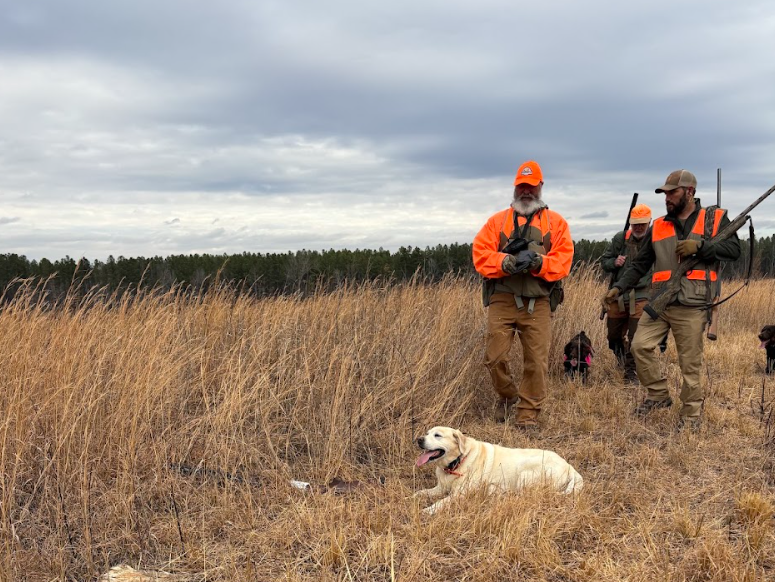
Blaze orange is essential for pheasant hunting. North Carolina requires a set amount of hunter orange, and most preserves enforce it for safety.
At minimum, wear a blaze orange hat and a vest that covers your upper body. Solid orange is easier to spot than camo patterns, especially in tall grass or brush.
A Long-Sleeve Base Layer That Manages Sweat
You will walk miles, even in cool weather, so you will sweat. A moisture-wicking, long-sleeve base layer pulls sweat off your skin and helps you stay warm when you stop.
Avoid cotton. It holds moisture and stays wet, which leaves you cold. Reach for synthetic fabrics or lightweight merino wool.
An Upland Vest That Carries The Essentials
An upland vest worn over your base layer keeps shells and small gear within reach. Many include a rear game bag for carrying birds.
Look for shell loops, roomy cargo pockets, and a game bag that zips closed. An adjustable fit helps when you add or shed layers.
Brush Pants Or Chaps For Thick Cover
Your legs take a beating in briars and tall grass. Regular pants or denim will not hold up, and the scratches add up fast.
Brush pants have a tough outer face that deflects briars and dries quickly. Chaps over regular hunting pants work too, and they are easy to pull on and off. Give them a loose fit so you can move freely.
Choose Footwear For Miles, Mud, And Hills
Good boots are one of the most important calls you will make for pheasant hunting. The right pair keeps your feet dry, supported, and comfortable all day.
Why Waterproof Boots Matter In Dew And Wet Ground
Even on dry days, morning dew soaks through non-waterproof boots fast. Piedmont fields hold moisture, especially in low spots and shaded woods.
Waterproof boots with a solid liner keep your feet dry through dew and mud. Wet feet lead to blisters and chill, which can end a hunt early.
Ankle Support And Traction On Uneven Terrain
Rolling hills and woods always carry the risk of a turned ankle. A boot with a 6 to 8 inch shaft gives good support without feeling stiff.
Lug soles grip mud and wet grass better than smooth ones. For our mix of fields and woods, pick a boot that handles both open walking and uneven ground.
When To Pick Insulated Vs Uninsulated Boots
Uninsulated or lightly insulated boots (0 to 200g) work best for early-season hunts when it is above 45 degrees. They keep your feet from overheating.
Mid-insulated boots (400 to 600g) are a solid all-season pick for most fall and winter hunts. Heavily insulated boots (800g and up) are only needed on very cold days below 20 degrees.
Layer For North Carolina Fall And Winter Weather
Piedmont weather is unpredictable during hunting season. Mornings can be cold and windy, then warm up fast by mid-morning.
A layering system lets you adjust as the day changes. The goal is simple: stay warm when you stop and cool when you are moving.
Breathable Midlayers For Cool Mornings
A midlayer between your base and outer shell adds warmth without bulk. Wool sweaters or lightweight fleece work well from 35 to 50 degrees.
Keep midlayers slim so they fit under your vest and do not bind your shoulders. You want your arms free for quick gun mounts.
Outer Layers For Wind And Rain
A waterproof jacket and rain pants are worth bringing, even when the forecast looks clear. Weather can shift fast, and getting soaked miles from the truck is no fun.
Look for a lightweight waterproof shell that packs into your vest or bag. Cargo pants with a water-resistant finish work in dry weather, paired with your chaps or brush pants.
Camouflage is not needed for pheasant hunting, since birds are flushed by movement. Some folks like it for tradition, and it does no harm.
Cold-Weather Accessories For Hands And Neck
Insulated gloves should be thin enough for trigger work, since bulky gloves get in the way. Flip-top mittens are handy while you wait, then open quickly when a bird flushes.
A fleece or merino neck gaiter adds warmth on cold, windy mornings without much bulk.
Bring The Small Gear That Improves Safety And Comfort
Beyond clothing, a few small items keep you safe and comfortable. They take almost no space but earn their spot in the bag.
Eye And Ear Protection In The Field
Shooting glasses protect your eyes from hulls, brush, and glare. Clear or light-tinted lenses suit low light, while amber or yellow help on cloudy days.
Ear protection is easy to forget and just as important. Shotgun blasts add up over time. Foam earplugs fit in a pocket, and electronic muffs let you hear between shots.
What To Carry In A Vest Or Utility Bag
Pack light, but cover the basics. Bring a small first aid kit with bandages and blister care.
A compass or GPS is smart on new ground. A game bag or strap keeps birds clean, and a compact cleaning kit helps with a quick barrel check after wet brush.
A small daypack holds snacks, extra shells, and water.
Dog Items To Pack If You Bring Your Own Bird Dog
If you are bringing your own bird dog, add a few extras. An e-collar helps with control in open fields.
Pack treats for energy and reward, a collapsible water bowl, and a protective vest for thick cover. A small dog-specific first aid kit is wise. Our private land rentals near Lexington also give you room to work and train your dog before the season.
Dress For The Hunt You Are Actually Taking
Pheasant hunting clothing is not one-size-fits-all. The hunt, the season, and the terrain all matter.
Thinking these through before you leave the house saves you from a rough day.
Early Season Vs Late Season Adjustments
Early-season hunts in September and October call for lighter clothes. Temperatures can reach the 60s and 70s, and the cover is thick and leafy.
A breathable long-sleeve shirt, brush pants, and light waterproof boots work well early on. For late-season hunts from December to February, switch to a full layering system.
Add your midlayer, bring a waterproof shell, and move to insulated boots. Cover is thinner then, but wind and cold become the bigger factors.
How Preserve Terrain Changes Clothing Choices
Flat-farmland gear may not cut it on varied preserve ground. At High Rock, you will walk meadows, wooded hollows, and brushy edges in the same hunt.
Brush pants or chaps matter more in mixed terrain, and boots with ankle support earn their keep on the hills. Layer up for shaded woods, and be ready to shed a layer in sunny fields.
Common Mistakes New Hunters Make
Wearing cotton base layers that stay wet and cold is a common error. Skipping brush pants because the day looks easy leads to scratched legs.
Boots without ankle support are risky on uneven ground. Forgetting ear protection, figuring it is just a few shots, is another mistake.
Too heavy a jacket brings on overheating. Dark or low-visibility clothing without blaze orange is simply unsafe.
If you are new to upland hunting, lean toward more protection. You can always shed a layer, but you cannot undo a day's worth of scratches.
Before You Head Out
A few steps before every hunt keep you legal and ready. Clothing matters, and so does the paperwork.
Check State Orange And License Rules
North Carolina requires hunters 16 and older to carry a valid hunting license. You can buy one through the state's Go Outdoors NC portal.
Hunting at a licensed preserve like ours uses a Controlled Hunting Preserve License, which extends the season. Blaze orange rules vary, but a hat and vest are the safe standard.
Review Preserve Requirements And Liability Forms
Every guest at High Rock completes a Release of Liability Form before entering the field. It is required for all activities.
Fill out your paperwork before you arrive so you do not lose field time. Review any extra rules for your hunt, since guided and self-guided hunts can have different safety protocols.
Ready For Your Next Pheasant Hunt?
The right clothing for pheasant hunting in North Carolina keeps you comfortable, safe, and focused on the birds instead of soggy socks or scratched shins. Get the layers, boots, and blaze orange sorted, and you are set for a good day in the field.
Outfitting For Guided And Self-Guided Hunts
On a guided hunt you can travel a little lighter, since your guide handles navigation and bird management. On a self-guided hunt, the route and gear are on you, so a compass and a sturdy utility bag are worth packing.
Either way, the ground here calls for real brush protection and supportive, waterproof boots, plus a layering system that flexes with the weather. You can see the details of our guided and self-guided upland bird hunts and match your kit to the day.
Dress smart, show up ready, and enjoy a full day in the Piedmont. When you are set to go, get outdoors with us near Lexington, or call or text 866-999-0930 with questions. Plan your next pheasant hunt.
Frequently Asked Questions
What should I wear pheasant hunting in winter conditions?
Start with a moisture-wicking base layer, add a wool or fleece midlayer, and top it with a waterproof shell. Insulated waterproof boots (400 to 600g) keep your feet warm, and a neck gaiter and insulated gloves help on cold mornings.
What type of pants are best for walking through thick cover while pheasant hunting?
Brush pants with briar-proof facing work best in thick cover. Waterproof chaps over regular pants are another good option and easy to strip off if the terrain changes.
What should men wear for pheasant hunting to stay comfortable and protected?
A moisture-wicking long-sleeve base layer, brush pants or chaps, and an upland vest over blaze orange are a solid start. Waterproof boots with ankle support and a packable rain shell round out the kit, especially if the weather looks iffy.
Do I need to wear camouflage for pheasant hunting, or is blaze orange enough?
Blaze orange is enough. Pheasants are flushed, not stalked, so camouflage does not help much. Blaze orange keeps you visible and safe around other hunters.
What colors should I avoid wearing while pheasant hunting for safety and effectiveness?
Skip white, since it can read like a deer's tail, and avoid red, blue, or black unless you have blaze orange on top. Those colors make it harder for others to see you in thick cover or low light.
Should I wear ear protection while pheasant hunting, and what kind works best?
Always wear ear protection while pheasant hunting, since even a few shots can cause permanent hearing damage. Foam earplugs are simple, affordable, and block loud gunfire well.
If you want to hear your friends and dogs, electronic ear muffs are a great choice. They pass normal sounds through while dampening the sharp crack of a shotgun. Whichever you choose, the best protection is the kind you will actually wear.
Reserve Your Presence in the Preserve
Join us at the preserve and step into the fields to lose yourself in the perfect scene of adventure, relaxation, and lasting memories.
Book Your High Rock Upland Escape
